
Banned Cosmetic Ingredients EU: The Four Rules That Matter
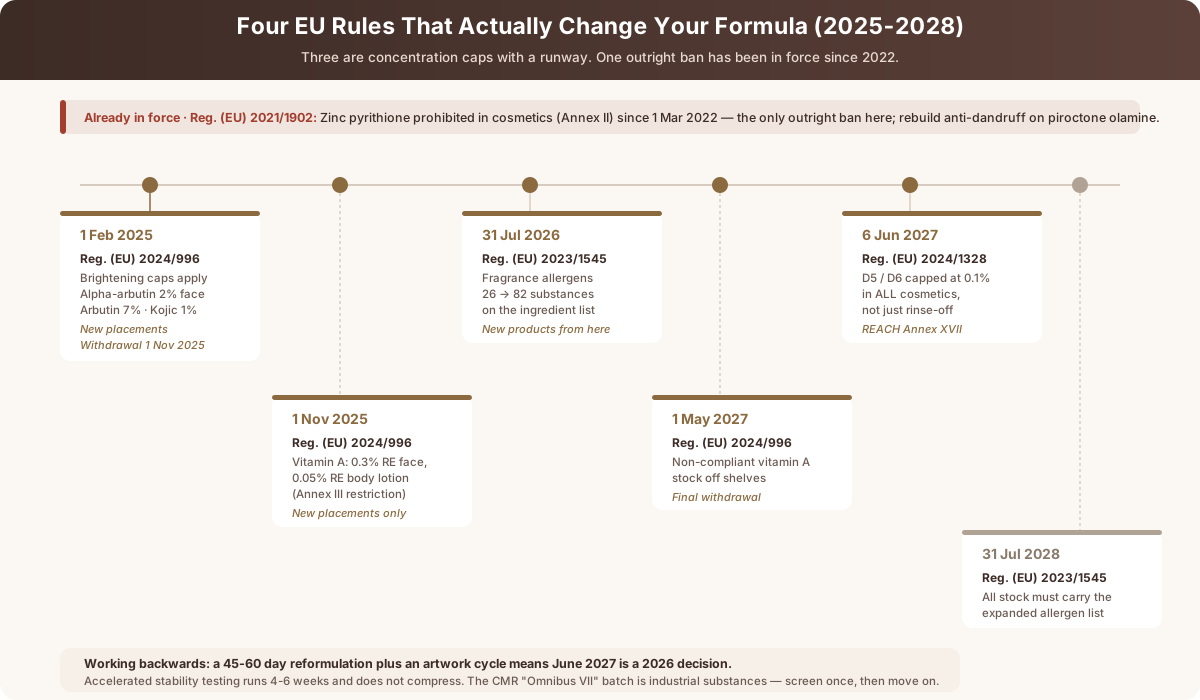
If you sell into the EU, the long list of banned cosmetic ingredients EU regulators maintain is not the document that will cost you money. Annex II of Regulation (EC) No 1223/2009 runs past 1,700 prohibited substances, and almost none of them appear in a modern personal-care formula in the first place. The document that actually costs you money is the one nobody writes for you: the reformulation schedule created by the small number of rules that touch ingredients still in wide commercial use.
Four of those matter between 2025 and 2028. None of them is a headline mass ban — three are concentration caps and one is a labelling expansion — but each maps to a replacement ingredient, a new stability run, and a decision about whether your Product Information File needs reopening. This guide is the manufacturing side of those four. The compliance side is already covered well by regulatory consultancies; what a factory can tell you is how long a fix takes and what it does to the formula.
We run 13 production lines under ISO 22716 and GMPC certification, and most of the EU-bound enquiries we handle in 2026 arrive the same way: a brand forwards a compliance flag from their Responsible Person, asks what it means for their existing SKU, and wants to know how long a fix takes. That is the question we answer here.
The four rules that actually change your formula
These stack, which is the part brands underestimate — a single anti-dandruff shampoo with a retinol claim and a fragrance can touch three of them at once.
| Rule | What changes | Key dates |
|---|---|---|
| Regulation (EU) 2024/996 | Vitamin A (retinol and esters) capped at 0.3% RE, 0.05% RE in body lotion; alpha-arbutin, arbutin and kojic acid also capped | Vitamin A: new placements from 1 Nov 2025, full withdrawal 1 May 2027. Brightening agents: new placements from 1 Feb 2025, full withdrawal 1 Nov 2025 |
| Regulation (EU) 2023/1545 | Fragrance allergen labelling expands from 26 to 82 individually declared substances | New products from 31 Jul 2026; all products from 31 Jul 2028 |
| Regulation (EU) 2024/1328 (REACH Annex XVII) | Cyclopentasiloxane (D5) and cyclohexasiloxane (D6) capped at 0.1% across all cosmetics, not just rinse-off | 6 Jun 2027 |
| Regulation (EU) 2021/1902 | Zinc pyrithione, the standard anti-dandruff active, prohibited in cosmetics (Annex II) | In force since 1 Mar 2022 |
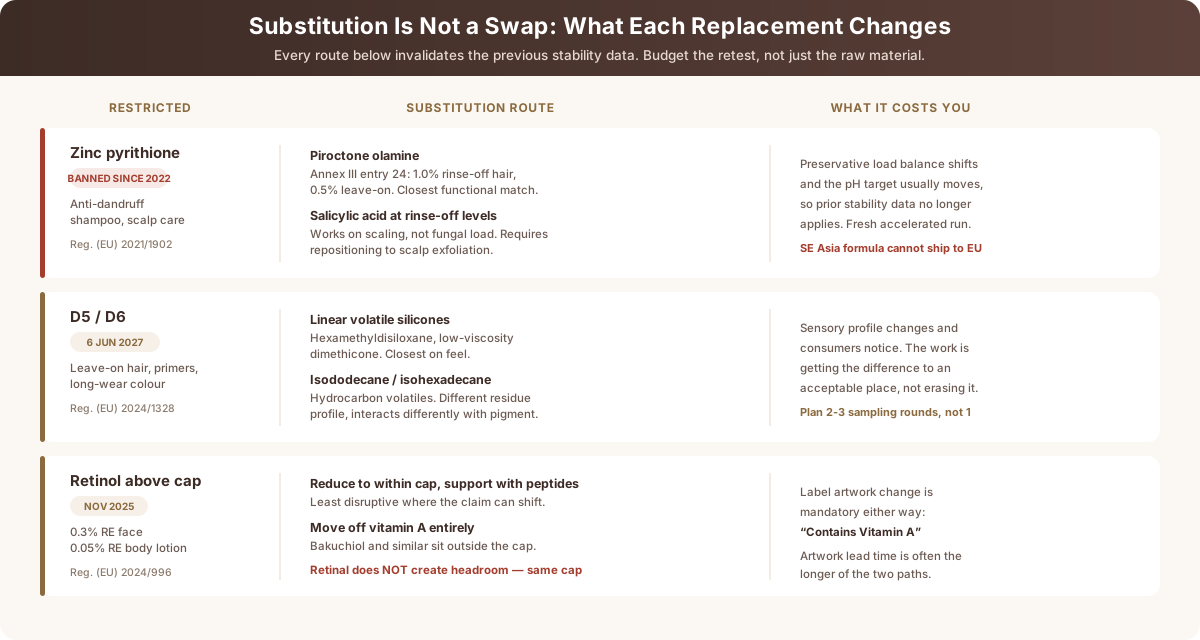
Three of these are caps rather than bans. A capped ingredient gives you a runway to reformulate at your next production cycle; the zinc pyrithione entry is the only outright prohibition on the list, and it has been in force for years — the surprise there is usually that a brand's Southeast Asian formula cannot simply be shipped to Europe unchanged.
The CMR bans you have probably read about — and why they mostly do not touch you
You may have seen coverage of Regulation (EU) 2025/877, the seventh "Omnibus" act, which took effect on 1 September 2025 and added a batch of substances newly classified as carcinogenic, mutagenic or toxic for reproduction (CMR) to Annex II. Article 15 of the Cosmetics Regulation makes CMR classification an automatic prohibition trigger, with no transition period, so the coverage frames it as urgent.
For most personal-care formulas it is not. The substances added by 2025/877 are overwhelmingly industrial and agrochemical — bisphenol AF, difenoconazole, clothianidin, dibutyltin compounds and similar — that were never used in cosmetics to begin with. It is worth screening your INCI list against the current Annex II once, because that is cheap and definitive, but you are unlikely to find an exposure there. The three rules above are where the real reformulation work sits.
Two adjacent points cause genuine confusion, so they are worth stating plainly. First, climbazole, the antifungal long used in anti-dandruff products, is often reported as "banned" — it is not banned in cosmetics. In December 2024 ECHA classified it as an environmental endocrine disruptor (harmful to aquatic life), which is a real signal that a future restriction is plausible, but as of 2026 no cosmetic concentration limit or prohibition has been enacted. Second, triclocarban and triclosan are not banned either; Regulation (EU) 2024/996 restricts them to specific low limits (triclocarban to 0.2% outside mouthwash) rather than removing them. If a supplier tells you these are prohibited, ask which regulation and which annex entry — the answer will tell you quickly whether they are reading the current text or repeating a headline.
Not sure which route fits your product?
Send us your brief and our formulators will tell you what is realistic on formula, MOQ, and timeline before you commit to anything.
Vitamin A: a cap, not a ban, and the difference matters
Regulation (EU) 2024/996 restricts vitamin A and its common derivatives — retinol, retinyl acetate and retinyl palmitate — based on the SCCS opinion adopted in October 2022. It is a restriction, not a prohibition: the three forms were added as entry 376 of Annex III (the restricted list), so they remain legal below the cap and with the required warning, and non-compliant only above it. The limits are expressed as Retinol Equivalent, which is the detail brands most often get wrong.
| Product type | Maximum |
|---|---|
| Face products, other leave-on and rinse-off | 0.3% RE |
| Body lotion | 0.05% RE |
| Lip products, oral spray, sunscreen | 0.05% RE |
Products placed on the market from 1 November 2025 must comply. Everything still on shelves must be compliant by 1 May 2027. Any product containing vitamin A derivatives also needs the warning statement "Contains Vitamin A. Consider your daily intake before use" on the label — a packaging artwork change, not just a formula change, and artwork lead times are frequently the longer of the two.
Retinol Equivalent is a conversion, not a raw percentage. Retinyl palmitate at 1.0% does not contribute 1.0% RE, because the ester carries more molecular weight per active retinol unit. Factories that quote you a compliant number without stating which derivative and which conversion factor they used are guessing. Ask for the calculation.
Reformulating a retinol range for the 0.3% ceiling
Most premium retinol serums built for the US market sit at 0.5% to 1.0% retinol, which puts them straight over the EU line. Three routes out:
- Reduce and support. Drop retinol to within 0.3% RE and rebuild perceived performance with adjacent actives — bakuchiol, peptides, or niacinamide — that carry no vitamin A restriction. This is the least disruptive path when the brand can accept a repositioned claim.
- Switch to retinal (retinaldehyde). Also a vitamin A derivative and also counted toward the RE cap, so this does not create headroom. It is worth considering only for stability or tolerance reasons, not compliance reasons. We flag this because several brands have arrived assuming retinal was outside scope.
- Move to a non-vitamin-A alternative entirely. Bakuchiol, and the newer generation of retinol-adjacent actives, sit outside Regulation (EU) 2024/996. Our breakdown of current active ingredient trends covers what is realistically available at OEM volumes and what is still marketing-led.
The same regulation is where a brightening-focused OEM has more exposure than the retinol clause. Alongside vitamin A, 2024/996 caps alpha-arbutin at 2.0% in face products and 0.5% in body products, arbutin at 7.0% in face cream, and kojic acid at 1.0% in face and hand products, and restricts the phytoestrogens genistein (0.007%) and daidzein (0.02%). These brightening-agent limits run on an earlier clock than retinol: new placements on the market from 1 February 2025, full withdrawal of non-compliant stock from 1 November 2025 — both dates already passed. If a brightening formula destined for the EU is still running any of these above the cap, it is non-compliant now, not on a future deadline.
The alpha-arbutin cap in particular is a safety ceiling set by the SCCS, not a performance optimum — a distinction we hold to on every brightening formula we quote, because the two get conflated constantly. The arbutin and alpha-arbutin entries also carry a condition that any hydroquinone present as a trace from the raw material must stay at the lowest unavoidable level. We hold to these ceilings across brightening formulas including our glutathione brightening serum, and state a baseline and range rather than a fixed figure so the level can be set against your destination market.
D5 and D6: the 2027 problem hiding in your hair care line
Regulation (EU) 2024/1328 amended entry 70 of Annex XVII of REACH to cap cyclopentasiloxane (D5) and cyclohexasiloxane (D6) at 0.1% by weight across all cosmetic products, not just the wash-off products the earlier restriction covered. (D4 was already restricted to 0.1% in wash-off products under the previous version of the entry; this amendment is about extending the D5 and D6 limit to leave-on products.) The compliance date is 6 June 2027, 36 months after the regulation entered into force in June 2024.
ECHA classified these cyclic siloxanes as substances of very high concern on persistence grounds (PBT and vPvB), which is why the restriction came through REACH rather than the Cosmetics Regulation. The practical consequence is that many brands have not seen it flagged, because their Responsible Person is watching Annex II and Annex III of the Cosmetics Regulation, not Annex XVII of REACH.
Where the exposure sits, in our order of severity:
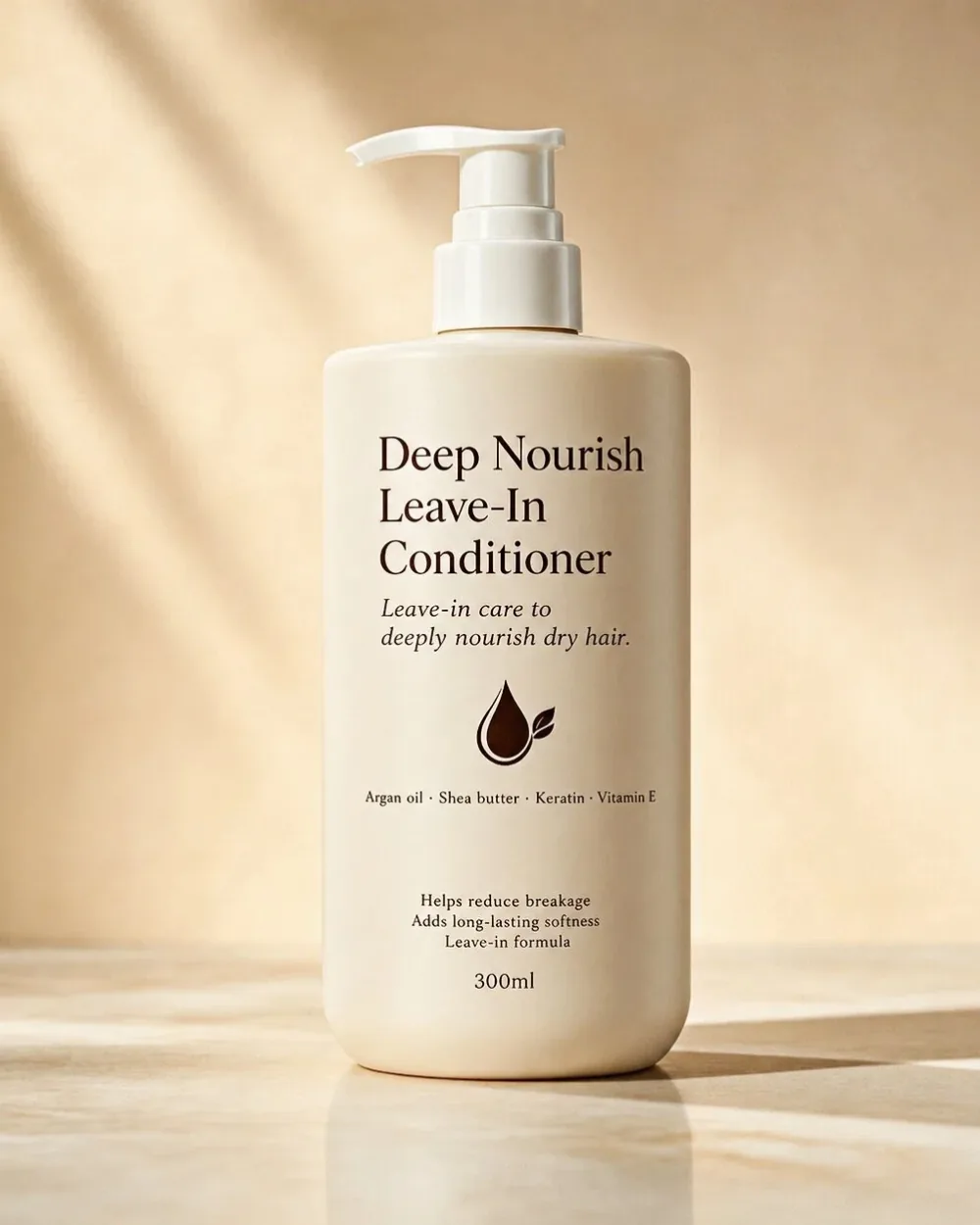
- Leave-on hair serums and heat protectants. D5 has historically been used at 5% to 20% in this category as the primary volatile carrier. There is no version of this reformulation that is a small tweak. Leave-on formats such as our deep nourish leave-in conditioner sit directly in scope from 6 June 2027.
- Primers and long-wear colour cosmetics. Cyclic siloxanes deliver the dry, slip-forward feel this category is built on. Replacing them changes the sensory profile in a way consumers notice.
- Antiperspirants and dry-touch sunscreens. Same mechanism, same problem.
- Conditioners and rinse-off treatments. Lower exposure, since the old rinse-off restriction already pushed most formulas below the threshold.
What we substitute for D5
- Linear volatile silicones — hexamethyldisiloxane and low-viscosity dimethicone grades sit outside the cyclic restriction and reproduce much of the volatility and dry-down. Closest match on feel.
- Isododecane and isohexadecane — hydrocarbon volatiles, widely used in colour cosmetics. Good spreadability, different residue profile, and they interact differently with pigments and film formers.
- C13-16 isoparaffin and similar esters — for formulas where the goal is emollient slip rather than volatility.
None of these is a like-for-like swap on sensory profile. The honest position is that a D5-free heat protectant feels different from a D5 one, and the reformulation work is mostly in getting the difference to an acceptable place rather than eliminating it. Brands that budget one sampling round for this are usually wrong; two to three is realistic.
Fragrance allergens: 82 substances, and it is a labelling problem first
Regulation (EU) 2023/1545 expands the list of fragrance allergens requiring individual declaration on the ingredient list from 26 substances to 82. New products must comply from 31 July 2026; existing products have until 31 July 2028.
The disclosure thresholds are unchanged: 0.001% in leave-on products and 0.01% in rinse-off products. What changed is how many substances trip them. A single natural essential oil can contain a dozen of the newly listed allergens as constituents — which means the ingredient list on a lavender body lotion may go from three declared allergens to eleven, without a single change to the formula. Fragrance-forward products carry the heaviest declaration load; our eau de toilette range is where we see the longest allergen statements.
This is the change most likely to catch brands who assume "natural fragrance" is the safe route. It is not, from a labelling standpoint. Essential oils carry more declarable constituents than most synthetic fragrance compounds, and the new list makes that gap wider.
The OEM response, in order
- Get an updated allergen breakdown from your fragrance house. Not the old 26-allergen certificate — the full IFRA-format statement against the 82-substance list. Most reputable suppliers have issued these; some smaller houses have not, and that is a supplier problem you want to find in 2026 rather than 2028.
- Decide whether to relabel or reformulate. If the expanded declaration makes the ingredient list unwieldy or undermines a clean-beauty positioning, reformulating the fragrance to drop below thresholds is an option. It is usually cheaper than it sounds, because fragrance houses can rebuild a scent profile around constrained inputs.
- Sequence the artwork change with a production run. Relabelling outside a scheduled run means paying for a packaging change twice.
For brands running multi-market ranges, note that this diverges from US requirements, where fragrance can still largely be declared as a single "fragrance" entry. A shared label across both markets is no longer realistic for scented products.
Cosmetic ingredients banned in Europe but not the US
The gap is large and frequently misrepresented in both directions. The accurate framing: Annex II of Regulation (EC) No 1223/2009 lists over 1,700 prohibited substances, while US federal law has historically prohibited or restricted around 11. That comparison is real, but it does not mean US products are unregulated — it means the two systems restrict differently.
The EU operates a precautionary, list-based prohibition system: a substance classified as CMR is banned by default under Article 15. The US, under FD&C authority, has relied on a general safety standard with few explicit prohibitions. MoCRA, signed in December 2022 and still phasing in, introduces mandatory facility registration, product listing and safety substantiation — closing part of the gap on process, though not by producing a long prohibition list. We cover the current filing obligations in our MoCRA compliance guide for cosmetics brands.
The substances that most often create a genuine EU/US divergence in the formulas we are asked to quote:
| Substance | EU status | US status | OEM consequence |
|---|---|---|---|
| Hydroquinone | Prohibited in cosmetics (Annex II) | Permitted OTC at 2% for skin lightening | Two separate formulas required; no shared SKU possible |
| Zinc pyrithione | Prohibited in cosmetics since Mar 2022 (Reg. 2021/1902, Annex II) | Permitted as an OTC drug active | Split anti-dandruff range: EU version rebuilt on piroctone olamine |
| Retinol above 0.3% RE | Restricted (Reg. 2024/996, Annex III) | No concentration limit | EU-specific strength tier |
| D5/D6 above 0.1% | Restricted from Jun 2027 (Reg. 2024/1328, REACH) | Permitted | Regional formula split or global reformulation |
| Certain sunscreen filters | Approved list differs by market | Narrower approved list than EU | See our market-by-market sunscreen filter comparison |
The operational question is whether to run one global formula at the strictest common denominator, or regional variants. Our default advice: single formula for anything you can build compliantly for the EU without losing the product, regional split only where the EU restriction removes the product's reason to exist — a 2% hydroquinone lightener has no compliant EU version, so there is nothing to harmonise. The EU-legal route to the same brief is a different active system, which is what sits behind our niacinamide brightening anti-spot cream.
Running to the EU standard globally costs slightly more per unit and saves substantially on documentation, warehousing and the risk of the wrong pallet reaching the wrong port. For brands under roughly five SKUs, the harmonised route is almost always the cheaper total.
What reformulating actually takes: the schedule nobody quotes you
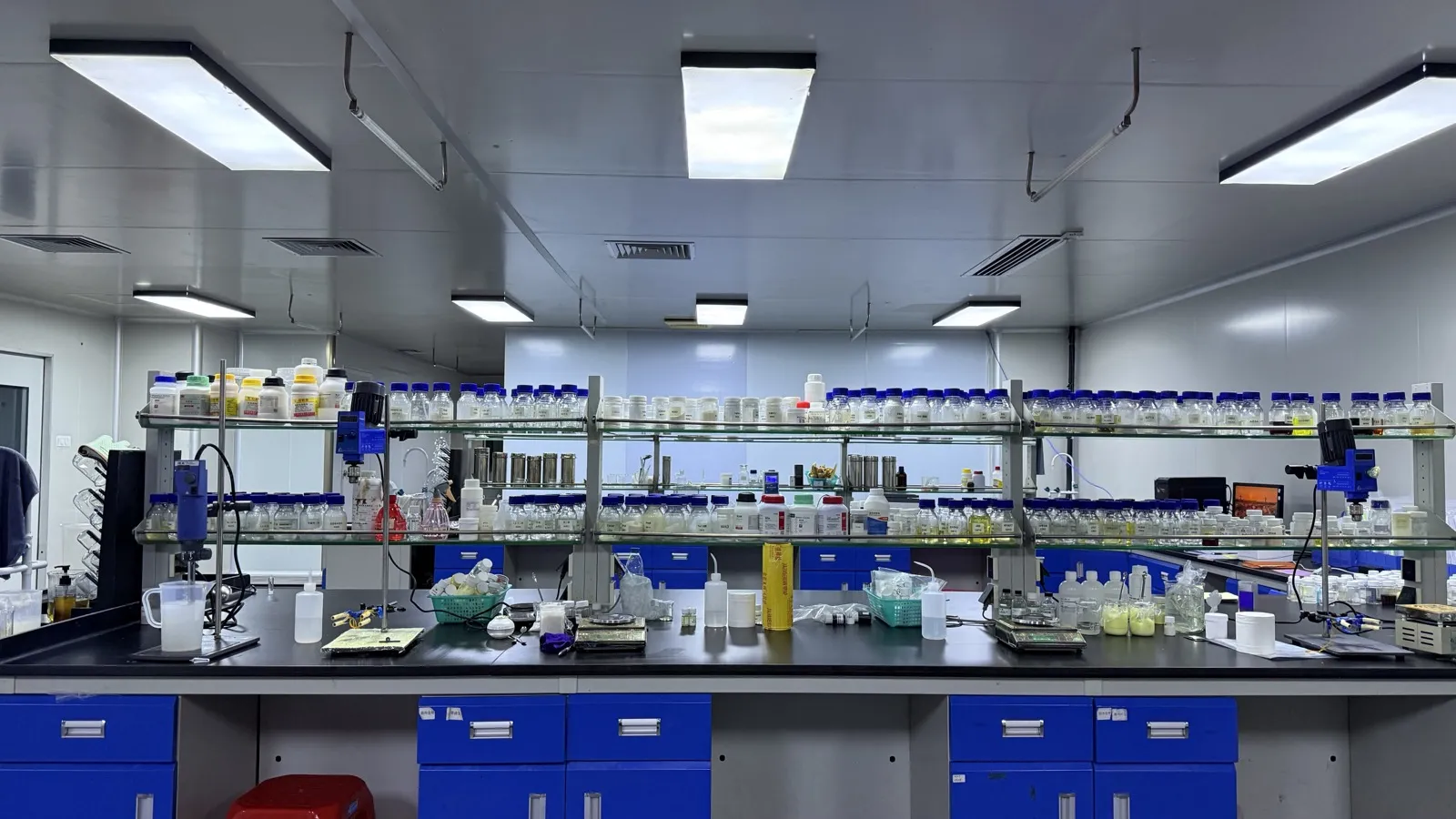
This is where the regulatory guides stop and the manufacturing question starts. A compliance flag is not a formula change; it is the start of a sequence with a real duration. Here is how the work breaks down on our lines for a standard emulsion or aqueous formula.
| Stage | Duration | What happens |
|---|---|---|
| Formula assessment | 3–5 working days | Screen the existing INCI list against Annexes II, III and REACH Annex XVII; identify which restriction applies and whether a cap or a prohibition is in play |
| Substitution and lab trials | 2–3 weeks | Bench trials of the replacement system; pH, viscosity and sensory adjustment; preservative efficacy re-check where the change affects the system |
| Sample approval | 1–2 weeks | Client evaluation, usually one revision round; two to three rounds where sensory profile is central, as with D5 replacement |
| Accelerated stability | 4–6 weeks | Elevated temperature and cycling protocols; runs in parallel with artwork and documentation work |
| Documentation update | Parallel | Updated specifications and supporting data for the Responsible Person to revise the Product Information File |
Total realistic window: 45 to 60 days from brief to production-ready formula, for a standard cream, lotion, serum or cleanser. Formats that need extended testing — anhydrous balms, high-oil systems, anything with an SPF claim — run longer, and we quote those separately rather than compressing them.
Two things shorten this materially. First, we hold an existing library of EU-compliant base formulas across cleansers, serums, creams, body care and hair care, so most substitutions start from a validated base rather than a blank sheet. Second, running assessment and lab trials concurrently for multiple SKUs from the same range shares most of the trial work — a five-SKU range does not take five times as long as one.
What does not compress is accelerated stability. A four-to-six week protocol is a four-to-six week protocol, and a factory offering to skip it or shorten it to hit your date is handing you a shelf-life risk in exchange for a calendar win. If you want to understand what a credible report contains, we walk through it in how to read a cosmetic stability testing report.
MOQ during a reformulation
Reformulation is one of the few situations where we routinely recommend a smaller first run than the brand wants to order. Produce a compliance-verification batch, get it through your Responsible Person's review and your own market check, then scale. The alternative — committing full volume to a reformulated product before the documentation is signed off — is how brands end up with compliant stock they cannot sell for a different reason, usually an artwork or claims issue found late.
Our standard MOQs allow this: a verification run at the low end of the tier, then the volume order once the file is closed. Brands transferring an existing EU range from a European manufacturer to China face an additional set of questions around specification transfer and documentation continuity, which we cover in transferring cosmetics production between Europe and China.
A practical audit sequence for your current range
If you are shipping to the EU now and have not reviewed your formulas against this wave, work in this order. It is sequenced by consequence, not by regulation date.
- Check anti-dandruff products for zinc pyrithione. The one outright prohibition in scope, in force since March 2022. A formula built for Southeast Asia on zinc pyrithione cannot be sold in the EU at all; the EU version has to be rebuilt on piroctone olamine, which is a reformulation rather than a swap.
- Check brightening face and hand products for alpha-arbutin, arbutin and kojic acid. Caps of 2%, 7% and 1% respectively, all in force since 1 November 2025. This is the live exposure most brightening OEM ranges actually have.
- Calculate Retinol Equivalent on every vitamin A product. Not the raw derivative percentage — the RE conversion. Body lotions are the tight constraint at 0.05%.
- Search your INCI lists for cyclotetrasiloxane, cyclopentasiloxane and cyclohexasiloxane. Leave-on hair and colour cosmetics first. June 2027 feels distant until you count backwards through a 60-day reformulation and a packaging cycle.
- Request updated 82-allergen statements from every fragrance supplier. Scented products, natural fragrances first.
- Decide harmonise or split for each affected SKU before starting lab work, because the answer changes what we develop.
Steps one to three are the ones with live exposure today — the zinc pyrithione prohibition and the brightening-agent caps are already in force, and the vitamin A cap has applied to new placements since November 2025. Steps four and five are scheduled work you can plan into normal production cycles if you start in 2026 rather than 2027.
FAQ
How many cosmetic ingredients are banned in the EU?
Annex II of Regulation (EC) No 1223/2009 lists over 1,700 prohibited substances, and the list grows each year as newly classified CMR substances are added through the Omnibus regulations. Annex III adds several hundred more substances that are permitted only under specific concentration limits and conditions of use. For formulation purposes, the restricted list in Annex III usually matters more day to day than the prohibited list, because that is where concentration caps and product-type conditions sit.
Do I have to withdraw products already on the shelf?
It depends on the instrument. The vitamin A limits under Regulation (EU) 2024/996 applied to new placements from 1 November 2025 and require full withdrawal of non-compliant products by 1 May 2027; the brightening-agent caps in the same regulation (alpha-arbutin, arbutin, kojic acid) ran earlier, requiring full withdrawal by 1 November 2025. The expanded allergen labelling under Regulation (EU) 2023/1545 applies to new products from 31 July 2026 and to all products from 31 July 2028. The zinc pyrithione prohibition under Regulation (EU) 2021/1902 has been fully in force since 1 March 2022, so any remaining stock is already non-compliant. Check which instrument covers your ingredient before assuming you have a runway.
Can I keep one formula for both the EU and the US?
For most product types, yes — building to the EU standard produces a formula that is compliant in the US, since the EU restrictions are generally stricter. The exceptions are products whose function depends on a substance the EU prohibits outright, such as a 2% hydroquinone lightener, where no compliant EU version exists and a regional split is unavoidable. Scented products now also need market-specific labelling regardless of whether the formula is shared, because US rules still permit a single "fragrance" declaration.
How long does an EU compliance reformulation take?
For a standard cream, lotion, serum or cleanser, 45 to 60 days from brief to production-ready formula: assessment in under a week, lab substitution and trials over two to three weeks, sample approval in one to two weeks, and accelerated stability testing over four to six weeks running in parallel with documentation. Multiple SKUs from the same range share most of the trial work. Formats requiring extended testing, including SPF products and high-oil anhydrous systems, are quoted separately.
Who is responsible if a banned ingredient reaches the EU market?
Under Article 4 of Regulation (EC) No 1223/2009 the Responsible Person established in the EU carries the legal obligation for compliance, which in a private label arrangement is normally the brand or its appointed representative rather than the manufacturer. That said, the manufacturer supplies the specifications and supporting data the Responsible Person relies on. Our position is that the documentation we hand over should let your Responsible Person verify compliance independently rather than take our word for it — if a factory cannot produce that documentation, the exposure sits with you. Our guide to EU compliance for private label cosmetics sets out what the file needs to contain.
Working out your exposure
If you want a formula screened against the current Annex II, Annex III and REACH Annex XVII position, send the full INCI list with product type and target market. We return an assessment identifying which restrictions apply, whether each is a cap or a prohibition, what the substitution route looks like, and what the schedule would be — before any commitment to development work.
Most of the flags brands bring us are manageable inside a normal production cycle. The ones that become expensive are the ones found in 2027 that could have been found in 2026.
Ready to Start Your Project?
Tell us your product requirements. Our technical team responds within 24 hours with a detailed quotation.